



CureTape® Beauty
What impact does face tape have on skin improvement and regeneration?
For more than 25 years, CureTape® has been a trusted and indispensable tool among physiotherapists and other healthcare professionals for treating a wide range of injuries and complaints. Many people are already familiar with this brightly coloured elastic kinesiology tape, often seen on athletes during sporting events, but it is equally effective for supporting self-treatment of minor injuries at home. Its versatility and proven effectiveness have made it a staple in therapeutic practice.
Skin and lymphatic therapists have also been using CureTape® for years for specific applications where the tape plays a vital role. Within the method known as “Lymph Taping”, the tape is applied to:
- Stimulate lymphatic drainage and reduce oedema in the tissue
- Promote wound healing and scar recovery following surgery
It is precisely this professional experience that highlights how effective CureTape® can be in improving the condition and appearance of the skin.
Kinesiology tape from injury treatment to beauty and skincare
In recent years, growing attention has been given to cosmetic methods that help slow down the visible signs of ageing. While treatments such as Botox and fillers continue to rise in popularity, there is also an increasing interest in achieving skin renewal through healthy, non-invasive techniques that do not require surgery. Beauty taping is one of these innovative methods and its popularity continues to expand every year.
This approach offers a fascinating, natural alternative within the world of beauty and aesthetics. Once you understand the effects that elastic taping can have on the skin, it becomes clear why this product holds such great potential for the cosmetic industry. Explore the possibilities of Face Tape and discover the inspiration shared across social media under #beautytaping, #beautytape, #facetape and #facetaping.

Face taping, a groundbreaking method for skin renewal and aesthetic care
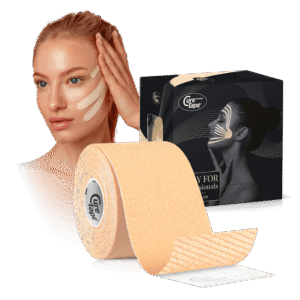
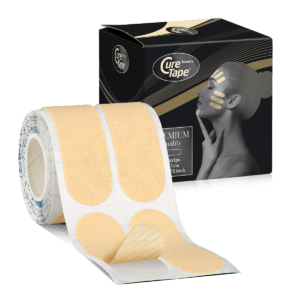
Face taping is a non-invasive technique that uses elastic CureTape® Beauty tape to support natural healing, enhance skin function and promote regeneration. By applying the tape to the skin, the natural biomechanics of the tissue are gently influenced, encouraging the body’s own recovery processes.
The taping technique relieves pressure within the skin (decompression) and works through the following mechanisms:
- Reduction of tissue pressure and stimulation of lymphatic drainage
When the tape is applied, it gently lifts the skin, creating space within the underlying tissues. This supports lymphatic flow, helping to remove excess fluid and waste products while reducing inflammation and swelling, both of which can interfere with the skin’s natural renewal process. - Improved blood flow and oxygen supply
The decompression caused by the tape enhances local circulation and oxygen delivery, two key factors in promoting skin repair and regeneration. - Collagen remodelling and improved skin elasticity after surgery
During post-surgical recovery, collagen fibres can sometimes form irregularly, resulting in thickened or raised scar tissue. Face taping helps guide the collagen to develop in a more organised way, reducing the risk of uneven scar formation and improving overall skin texture. - Enhanced skin elasticity
Regular use of BeautyTape supports the skin’s natural elasticity, helping to smooth the appearance of fine lines, wrinkles and stretch marks.
Examples of BeautyTape applications

Benefits of Beauty Taping for skin improvement:
- Non-invasive and painless: Face taping is a gentle and comfortable method. Non-invasive means that the skin is neither cut nor punctured with needles, making it a safe and natural alternative to traditional cosmetic procedures.
- Holistic approach: The taping technique works in harmony with the body’s natural healing process. The tape contains no active ingredients or medication, instead it stimulates the skin and underlying tissues mechanically to support regeneration and recovery.
- Versatile and widely applicable: Face tape can be used on various parts of the body. Once you understand its potential effects, the range of applications is remarkably broad, from face taping to lymphatic strips on the abdomen or legs to promote drainage, reduce the appearance of stretch marks, or encourage healing after surgery.
- Long-lasting results: Regular use of BeautyTape helps maintain the condition of the connective tissue by stimulating fibroblasts to produce collagen and elastin. Over time, this leads to visibly improved skin quality and resilience.
Why can face tape be effective?
To understand why BeautyTape can be beneficial, it helps to take a closer look at how the skin functions, how ageing affects it, and how natural renewal takes place.
How does skin renewal work?
The skin is the body’s largest organ and is constantly regenerating. It is made up of several layers: the outer layer, known as the epidermis, and the deeper layer beneath it, the dermis. The dermis is a connective tissue layer about one to three millimetres thick. In the epidermis, dead skin cells are continuously replaced by new ones in a natural cycle that takes roughly 28 days. Wound healing is also a form of skin renewal, although the process is more complex as the body works to repair damaged tissue. It begins with inflammation and continues through the creation of new tissue and the restructuring of collagen fibres to restore the skin’s integrity.
General information about the skin
The biomechanical properties of the skin depend largely on the composition of the connective tissue. The most important components are collagen, elastin and a gel-like ground substance that acts as a lubricant between the collagen and elastin fibres. Fibroblasts are the key cells within the connective tissue and are responsible for producing the proteins collagen and elastin. Collagen makes up about 70% of the skin’s structure, with Type I collagen accounting for around 90% of that total. It provides firmness and strength, and when the skin stretches, the fibres align in parallel. Elastin, on the other hand, gives the skin its flexibility and resilience, working closely alongside collagen. When elastin fibres become fragmented, the skin may lose its shape and firmness. Both collagen and elastin are produced in the dermis, and together they are essential for maintaining the skin’s strength and elasticity. As we age, this natural production process gradually slows down.
How does skin ageing occur?
As we grow older, the skin’s renewal cycle becomes slower and the dermal layer gradually thins due to a decline in collagen levels. This process can begin as early as the mid-twenties, leading to a reduction in firmness and a more fragile skin texture over time.
Internal and external factors that influence skin ageing
Internal factors:
- The natural ageing process slows down the renewal of the skin, and the production of collagen and elastin gradually decreases. As the sebaceous glands become less active, the skin loses moisture, leading to a thinner and drier appearance.
- Hormonal changes also play a significant role. In women, the decline in oestrogen levels after menopause often accelerates the ageing process, resulting in a noticeable reduction in collagen production and overall skin density.
External factors:
- UV radiation: Prolonged exposure to sunlight contributes to the breakdown of collagen fibres, causing the skin to lose its firmness and elasticity.
- Smoking: The chemicals in cigarettes reduce blood circulation to the skin, which speeds up the ageing process and dulls the complexion.
- Air pollution: Just like UV radiation, pollution creates oxidative stress in the skin layers. These harmful particles can damage cells and connective tissues, accelerating the visible signs of ageing.
By understanding what drives the ageing process, we can find ways to slow it down and even influence it. The key lies in stimulating fibroblasts to boost collagen and elastin production, but how can this be achieved?
Well-known treatments to combat skin ageing include skincare products containing vitamin A acids, daily use of high-quality sunscreen, and maintaining a healthy lifestyle that avoids smoking. Other recognised methods for improving skin quality include vitamin C serums, chemical peels, laser therapy, microneedling, botox, fillers and ultrasound-based treatments.
Other names for BeautyTaping
Over the past 30 years, this taping method has been widely recognised in the medical field under names such as Kinesio Taping, Lymph Taping and Medical Taping. In more recent years, the technique has gained popularity within the cosmetic and beauty industry, where it is often referred to as BeautyTaping, Cosmetic Taping, DermoTaping, Face Taping or Aesthetic Taping.
Showing all 20 results
-

CureTape Beauty Cinta facial
€11,95In stockAdd to cart -
CureTape Beauty Face Tape
€11,95In stockAdd to cart -
CureTape Beauty Face Tape
€11,95In stockAdd to cart -
CureTape® Beauty Face Tape
€11,95In stockAdd to cart -
CureTape Beauty Cinta facial 2,5 cm – 1 Rollo
€7,95In stockAdd to cart -
CureTape Beauty Face Tape 2,5 cm – 1 Rolle
€7,95In stockAdd to cart -
CureTape® Beauty Face Tape 2,5 cm – 1 Rol
€7,95In stockAdd to cart -
CureTape® Beauty Face Tape 2,5 cm – 1 Roll
€7,95In stockAdd to cart -
CureTape Beauty Cinta facial 2,5 cm – 2 rollos
€12,95In stockAdd to cart -
CureTape Beauty Face Tape 2,5 cm – Doppelpack
€12,95In stockAdd to cart -
CureTape® Beauty Face Tape 2,5 cm – 2 Rollen
€12,95In stockAdd to cart -
CureTape® Beauty Face Tape 2,5 cm – 2 Rolls
€12,95In stockAdd to cart -
CureTape Beauty Face Tape Doppelpack + Gesichts-Schröpf-Set
€23,95In stockAdd to cart -
CureTape® Beauty – 2 x Cinta de Kinesiología + Ventosas de regalo
€23,95In stockAdd to cart -
CureTape® Beauty Face Tape Tube: 2 rollen + Gezichtscups
€23,95In stockAdd to cart -
CureTape® Beauty Face Tape Tube: 2 rolls + Facial Cups
€23,95In stockAdd to cart -
CureTape Beauty Cinta de Kinesiología Pre-Cortada (60 tiras)
€12,95Out of stockRead more -
CureTape Beauty Face Tape Streifen
€12,95Out of stockRead more -
CureTape® Beauty Face Tape Pre-cut (60 strips)
€12,95Out of stockRead more -
CureTape® Beauty Face Tape Strips
€12,95Out of stockRead more